

[Real Wrinkle Care] No-Tox[Jaw Botox, Forehead Botox, Glabella Botox] Notox that addresses the root cause
![[Jaw Botox, Forehead Botox, Glabella Botox] Notox that addresses the root cause](/_next/image?url=https%3A%2F%2Ffirebasestorage.googleapis.com%2Fv0%2Fb%2Fkkeutguro-7e583.firebasestorage.app%2Fo%2Fproducts%252Fguro%252Fen%252F1758617569866_84662fb2-5c18-409f-8f9b-7abbb623c97a_001-copy-1-ezgif.com-png-to-webp-converter.webp%3Falt%3Dmedia%26token%3D3c3dfe99-ffe9-4761-979f-9b929d23b0fe&w=2048&q=75)
[Jaw Botox, Forehead Botox, Glabella Botox] Notox that addresses the root cause
If you're concerned about wrinkles becoming more prominent over time We focus on areas where wrinkles are noticeable, such as the forehead, glabella, eye area, and under eyes. * VAT separate
Options
.png%3Falt%3Dmedia%26token%3D7b094bbb-bbe7-4b97-8657-7bf7f9480e43&w=1920&q=75)



Kkeuthan Clinic's NOTOX
For wrinkle management, many often think of Botox procedures first.
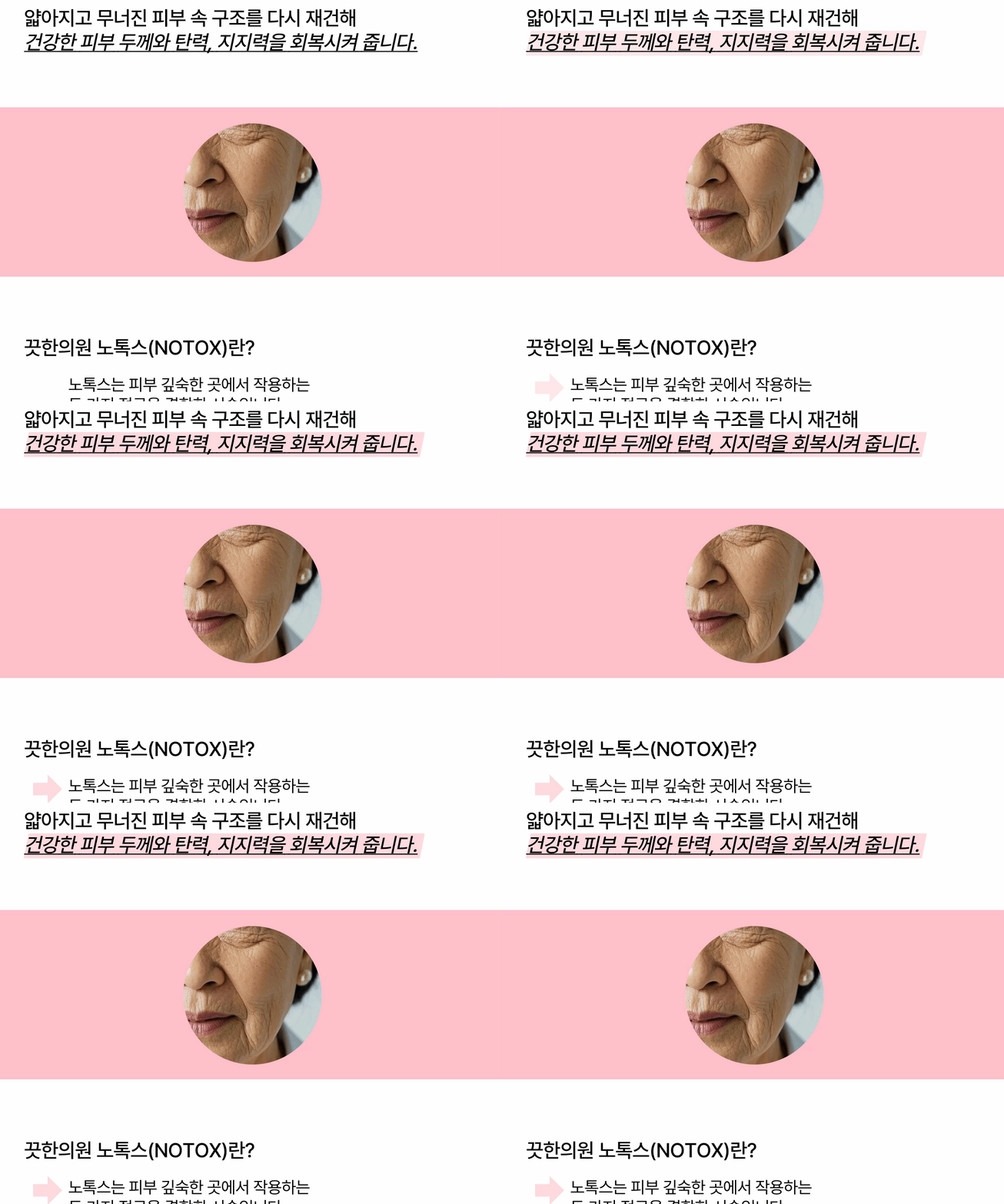
Botox is a treatment for wrinkles that appear when making facial expressions, such as on the forehead, glabella, and around the eyes,
which can help alleviate them relatively quickly.
However, this procedure temporarily restricts muscle movement,
and is closer to a method that prevents wrinkles from forming as easily.
Therefore, it differs from reversing the fundamental changes caused by skin aging.
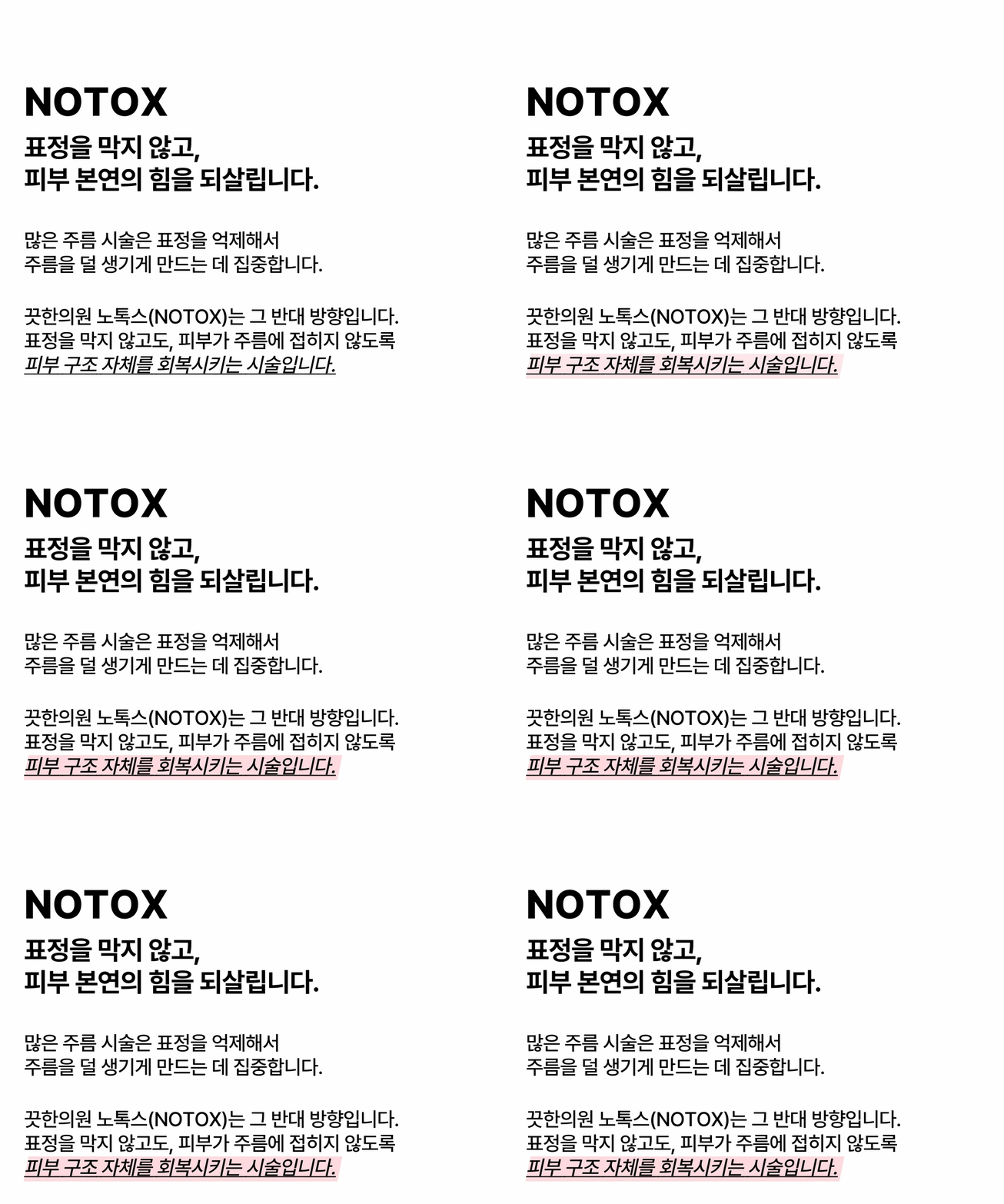
Kkeuthan Clinic's 'NOTOX' goes beyond simply reducing wrinkles,
focusing on restoring the healthy structure of the skin itself.
While Botox temporarily stops the movement of facial muscles to alleviate wrinkles,
NOTOX is a procedure that focuses on creating a skin environment where wrinkles do not form easily.
───────────────
3 Key Factors for Wrinkle Improvement
1. Dermal Regeneration
Areas where wrinkles are prominent often have a thin and weakened dermal layer.
Only when the skin recovers its thickness and health can fundamental wrinkle improvement be expected.
2. Collagen/Elastic Fiber Realignment
It is necessary to reorganize the internal structure of the dermis, which has collapsed due to aging, to regain the skin's support.
3. Strengthening Support
Areas where wrinkles form due to repetitive movement require support from within the skin.
Restoring the skin's own elasticity and firmness is crucial.
For reference, Botox procedures do not directly act on these three internal skin elements.
Instead, by temporarily restricting the movement of facial muscles,
it is an 'external action method' that suppresses wrinkle formation.
For this reason, temporary effects may be observed, but long-term maintenance can be difficult.
───────────────
Recommended NOTOX Areas
1. Forehead Wrinkles
The forehead area is prone to deepening wrinkle lines due to repeated facial expressions.
If Botox procedures are repeatedly performed, eyebrows may sometimes lower, or a somewhat rigid impression may result.
Kkeuthan Clinic's NOTOX procedure can improve skin thickness and strengthen support, leading to a naturally less creased forehead.
2. Glabellar Frown Lines
Glabellar frown lines, which tend to deepen and become fixed, are a common concern.
Even after Botox, fine lines may remain, or an awkward impression might sometimes result.
The NOTOX procedure can aid in deep skin regeneration and contribute to smoothly improving the wrinkle line structure from within.
3. Fine Lines Around and Under the Eyes
Fine lines around and under the eyes, areas where the skin is very thin and delicate, making wrinkles form easily.
If Botox is excessively administered to these areas, the corners of the eyes may appear unnatural when smiling.
NOTOX induces the skin's own regeneration with ingredients that help dermal layer regeneration,
and simultaneously, through ingredients that gently support the skin, natural wrinkle improvement can be expected.
4. Nasolabial Folds
Nasolabial folds are not solely caused by facial expressions. Sagging cheeks and reduced skin elasticity are also significant contributors to their formation.
Traditional Botox treatments may have limitations in improving these types of wrinkles.
NOTOX treatment can help improve nasolabial folds by healthily restoring skin thickness and strengthening the internal structures that support sunken volume.
5. Perioral Wrinkles (Around the Mouth)
The area around the mouth has a lot of movement and relatively thin skin, making it prone to wrinkles.
When considering Botox treatment, it's advisable to factor in the possibility of unnatural-looking expressions when speaking or smiling.
NOTOX treatment helps with skin regeneration and strengthens supporting structures, which can be expected to reduce perioral wrinkles while maintaining natural expressions.
6. Sunken Area Below the Corners of the Mouth (Marionette Lines)
This area is characterized by a sunken appearance due to reduced fat and thinning skin.
Since these are static wrinkles that exist regardless of facial expressions, Botox treatment alone may not provide sufficient improvement.
By applying regenerative ingredients and refining the overall line to strengthen support, improvement in this area can be expected.
───────────────
Recommended For
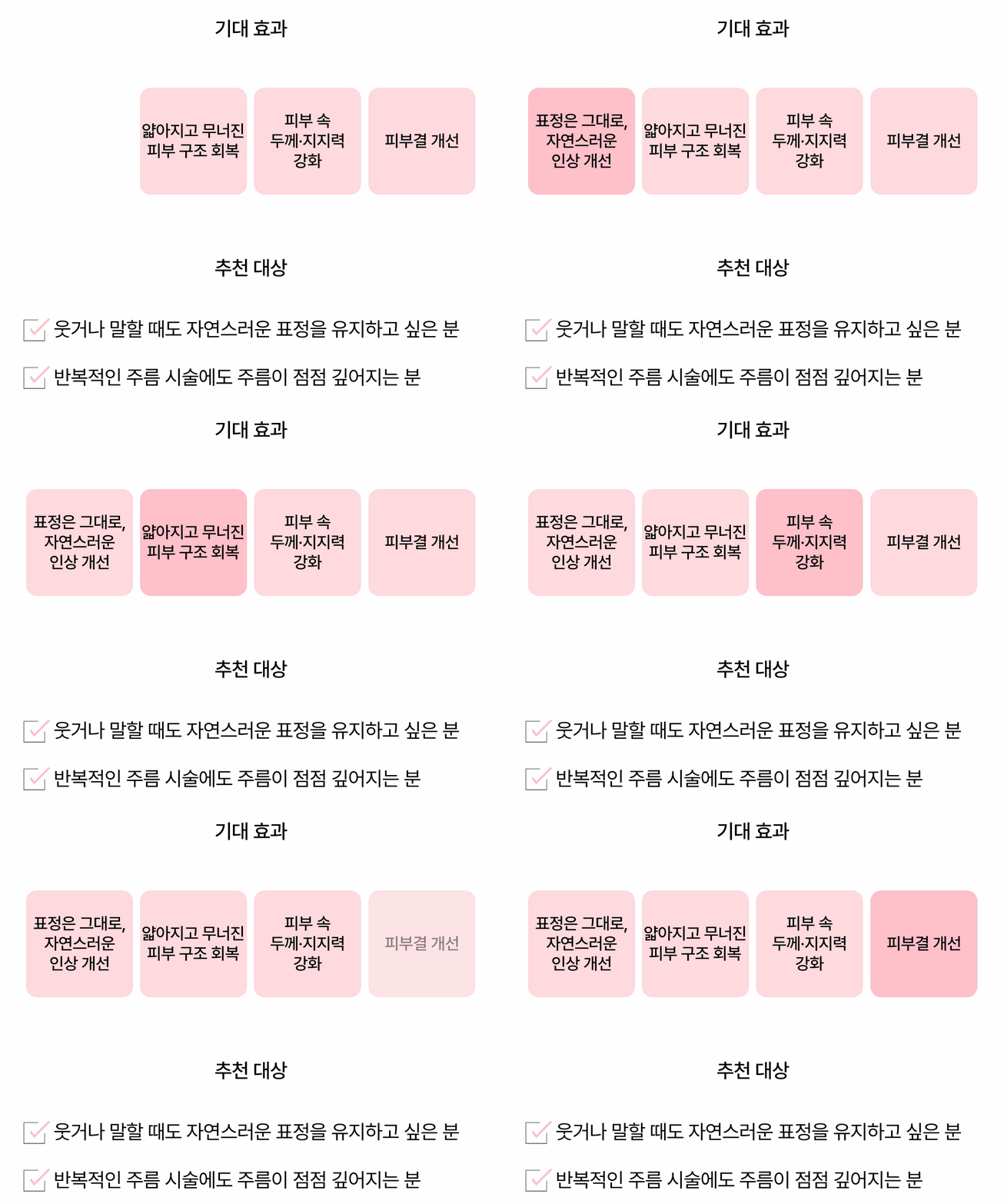
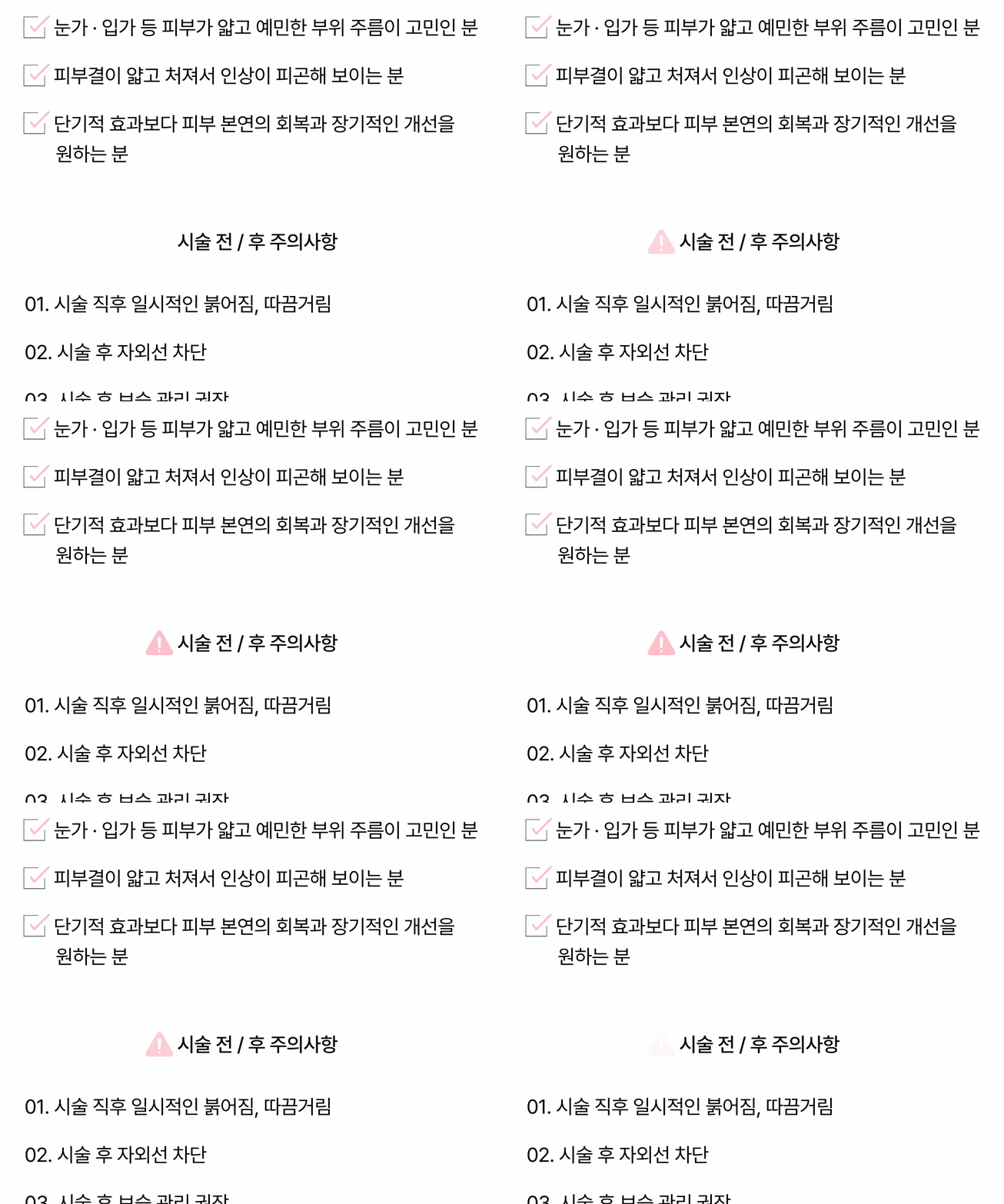
- 1. Individuals concerned about unnatural expressions due to repeated Botox treatments
- 2. Individuals who still have wrinkles after Botox treatment and feel that improvement is needed
- 3. Individuals with thin skin who feel their wrinkles are gradually deepening
- 4. Individuals who desire healthy and long-term wrinkle management rather than temporary changes
시술 진행 단계
첫 상담부터 마무리까지의 실제 진행 순서를 확인하세요.
- 01
피부 정리를 위한 자가 세안
- 02
마크뷰(Mark-Vu) 장비를 활용한 피부 정밀 분석
- 03
개인의 피부 상태에 맞춘 1:1 심층 상담
- 04
원장님과의 상담 후 맞춤 시술 디자인 및 진행
- 05
시술 후 피부 진정 및 재생 크림 도포
시술 기본정보
시술 시간, 마취, 회복, 유지기간을 한 번에 확인하세요.
TIME
30분 이내
ANESTHESIA
연고 마취
RECOVERY
즉시 일상생활 가능
DURATION
6~12개월
Q&A
고객님들이 가장 많이 물어보시는 내용을 모았습니다.
What is the difference between NoTox and Botox?

Botox works by temporarily reducing the movement of skin muscles. NoTox, on the other hand, reinforces the internal structure of the skin to help it regain its own support. This is expected to allow for natural facial expressions while having little impact on returning to daily life.
Approximately when can I expect to see the effects of the treatment?
Generally, you can expect new collagen production to begin about 3 weeks after the treatment, and you may notice changes accordingly.
What is the recommended treatment interval?
While it varies depending on individual skin conditions, we generally suggest considering treatment at intervals of 3-4 weeks.