


[Undiluted] Skincare[For Clear Skin] Glutathione Whitening Management
![[For Clear Skin] Glutathione Whitening Management](/_next/image?url=https%3A%2F%2Ffirebasestorage.googleapis.com%2Fv0%2Fb%2Fkkeutguro-7e583.firebasestorage.app%2Fo%2Fproducts%252Fguro%252Fen%252F1760327429105_f1011f81-4e76-44ff-a2b9-b42352e8358d_003-ezgif.com-png-to-webp-converter.webp%3Falt%3Dmedia%26token%3D095a9aa2-2817-43cd-a394-043fed222e56&w=2048&q=75)
[For Clear Skin] Glutathione Whitening Management
This treatment ionizes glutathione and uses microcurrents to help deliver active ingredients deep into the skin. Go beyond topical care and experience a clear, even skin tone. *VAT excluded.
Options
Treatment Details


Glutathione Snow White Management, also known as IU Injection
What is Glutathione?
Glutathione is a representative antioxidant substance abundantly present in our body's liver, kidneys, brain, and other organs.
It removes reactive oxygen species (ROS) to reduce cell damage and reactivates other antioxidants (such as vitamins C and E), playing a crucial role in anti-aging and cell protection.
Whitening Efficacy of Glutathione
Beyond simple antioxidant action, glutathione plays a role in making skin tone clear and even.
Tyrosinase Inhibition
It inhibits the action of tyrosinase, the enzyme that produces melanin, thereby preventing excessive pigment production.
Melanin Conversion Effect
It promotes the production of relatively brighter pheomelanin instead of dark and dense eumelanin, helping to brighten skin tone.
Pigment Inhibition by Antioxidant Action
Reactive oxygen species generated by UV radiation, heat, or inflammatory reactions stimulate melanin production, but glutathione removes them, thereby inhibiting pigment formation itself.
Synergy with Vitamin C
Vitamin C regenerates oxidized glutathione, and glutathione in turn inhibits melanin synthesis, forming a powerful whitening network.
In summary: Glutathione inhibits melanin and guides it towards a relatively brighter melanin pathway, contributing to natural and even skin tone improvement.
Why should you get Glutathione treatment at Kkeut Oriental Medicine Clinic?
Many people have encountered glutathione orally or via injection. However, these methods have clear limitations.
Limitations of Oral (ingested glutathione)
Its gastrointestinal absorption rate is low, and most of it is metabolized in the liver, so the amount that actually reaches the skin is extremely limited.
This is precisely the reason why “your skin doesn't immediately brighten just by eating it.”
Disadvantages of Intravenous Injection
Because it spreads throughout the body, it's difficult to concentrate on a desired area.
While it can be beneficial for liver and systemic antioxidant effects, it is a method with low targeting efficacy for improving facial pigmentation and skin tone.
Kkeut Oriental Medicine Clinic's Differentiated Approach
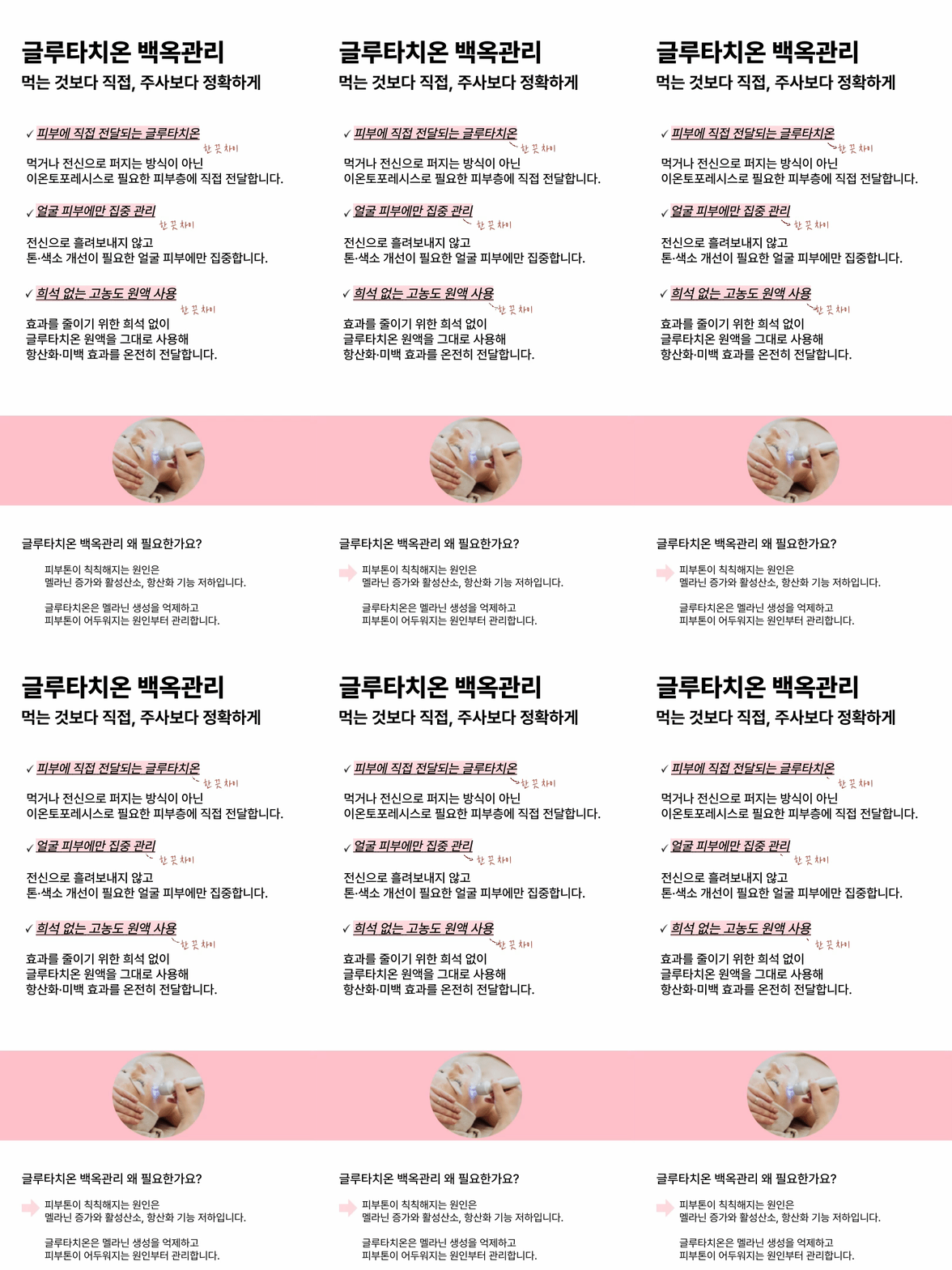
Application of Iontophoresis: Using electric current, glutathione is directly and intensively delivered beyond the skin barrier to the dermis layer, simultaneously overcoming the drawbacks of oral intake and injection.
Targeting Specific Areas Possible: Instead of flowing throughout the entire body, it is concentrated and absorbed into the facial skin where pigment and tone improvement are needed.
Uses undiluted solution as is: We do not compromise on effectiveness. We generously use 100% undiluted ampoule without dilution to maximize glutathione's antioxidant and whitening effects.
At Kkeut Oriental Medicine Clinic, we design glutathione care with the philosophy of “more direct than oral intake, more targeted than injection.”
Why should it be absorbed via Iontophoresis?
Limitations of Oral Glutathione: Absorption in the gastrointestinal tract is inconsistent, and because it is metabolized in the liver, it is difficult for it to reach the skin sufficiently.
Limitations of Simple Topical Application: The stratum corneum on the skin's surface is a powerful barrier, making it difficult for water-soluble ingredients like glutathione to penetrate deeply.
Advantages of Iontophoresis:
Electrorepulsion Effect: Negatively charged glutathione is pushed by electric current, allowing it to bypass the skin barrier.
Electroosmosis Effect: Creates a microscopic fluid flow, broadening the absorption pathway for ingredients.
Deep Layer Access: Not just a superficial treatment, it can transport active ingredients to layers close to the dermis.
In other words, iontophoresis is the method that allows absorption “more directly than oral intake, and deeper than topical application.”
Treatment Cycle and Recommended Frequency
Cycle: 1-week intervals
Recommended Sessions: Minimum of 5 sessions, consistently recommended
Maintenance: Regular supplementary care helps maintain stable skin tone.
관리 진행 절차
첫 상담부터 마무리까지의 실제 진행 순서를 확인하세요.
- 01
본인 세안
- 02
Mark-Vu 기기를 이용한 피부 정밀 분석
- 03
일대일 개별 맞춤 상담 진행
- 04
글루타치온 백옥 관리 시술
- 05
재생 크림 도포 및 마무리
시술 기본정보
시술 시간, 마취, 회복, 유지기간을 한 번에 확인하세요.
TIME
30분 이내
ANESTHESIA
마취 없음
RECOVERY
일상생활 바로 가능
Q&A
고객님들이 가장 많이 물어보시는 내용을 모았습니다.
Can I immediately return to my daily life after the treatment?

This treatment has relatively minimal burden on the skin. Therefore, most individuals are expected to have no difficulty returning to their daily lives immediately after the procedure.
Are there specific skin types for which LDM treatment is particularly recommended?
LDM treatment can be applied to various skin types. It can be particularly considered for individuals with inflammatory reactions, sensitive skin like atopic dermatitis, or those who feel burdened by stimulating procedures.
What is an appropriate interval and number of treatment sessions?
Generally, we recommend consistent treatment at intervals of about 1 to 2 weeks. Typically, 5 or more sessions can be considered, and adjustments may be necessary depending on the individual's skin condition.